
READING TIME 4.4 MINUTES
PNC Menon approach to quality and the ideas that continue to shape SOBHA
Success stories often begin with funding, connections or perfect timing. PNC Menon’s story began with something much smaller, just seven dollars and the willingness to start from scratch.
When he arrived in Oman in the mid-1970s, there was no blueprint for what would eventually become Sobha. His first business focused on interior decoration, earning a reputation for craftsmanship that soon opened doors to prestigious projects across Oman and neighbouring Gulf countries. Those early years shaped a philosophy that still defines the company today: quality should never depend on someone else.
That belief eventually became the foundation of Sobha’s unique approach to construction.
Instead of relying heavily on external contractors, the company gradually brought key operations under one roof, from design and manufacturing to construction and finishing. Today, this vertically integrated model is known as Backward Integration, allowing Sobha to maintain tighter control over quality, timelines and execution. What many once considered an expensive and risky strategy later became the subject of academic study at Harvard Business School.
Nearly five decades after its founding, Sobha has grown into an international real estate group with a development pipeline valued at around AED130 billion and a workforce supporting more than 50,000 families across multiple countries. In Dubai, communities such as Sobha Hartland have helped reinforce the developer’s reputation for precision, while newer mixed-use destinations across the city, including projects like RAW District, reflect a wider industry shift towards creating complete neighbourhoods rather than standalone residential towers.
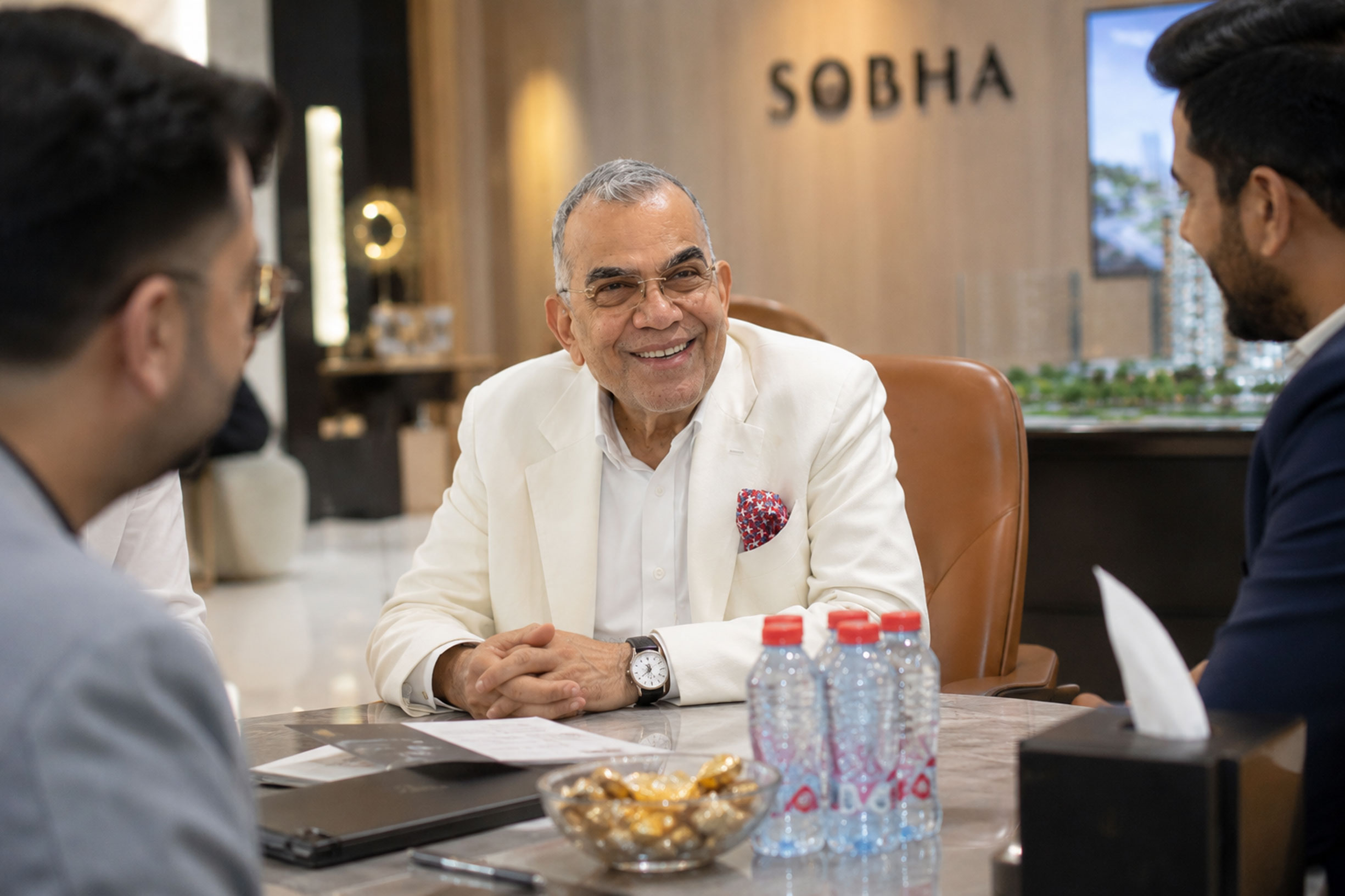
Speaking during the opening of Sobha’s latest furniture gallery, Menon reflected on his journey with the same humility that marked its beginning. Rather than speaking about wealth or recognition, he described success as a series of steps, explaining that even after decades in business, he still sees plenty of room to grow.
That mindset continues under the leadership of his son, Ravi Menon, who has carried forward the company’s commitment to detail and long-term thinking. For Sobha, quality isn’t treated as a marketing slogan. It’s part of the operating model, influencing every stage of a project long before buyers receive their keys.
Away from business, philanthropy remains equally important. Menon has committed half of his personal income to charitable initiatives focused on education, healthcare, sanitation, women’s empowerment and rural development across India, Oman and the UAE, believing that long-term success should benefit communities as much as businesses.
Asked what advice he would offer aspiring entrepreneurs, his response was surprisingly simple.
Don’t spend your career chasing someone else’s approval.
His own experience is proof that ideas dismissed today can become tomorrow’s benchmark. Sobha Backward Integration model was once questioned by many within the industry. Today, it’s studied by business schools and widely recognised as one of the company’s greatest competitive strengths.
Looking back, PNC Menon’s legacy isn’t measured only by the buildings carrying the Sobha name. It’s measured by the systems, standards and culture he created, principles that continue to shape one of the region’s most respected real estate brands long after the first project was completed.